Last Wednesday, Common Good Vermont convened 50+ nonprofit leaders at the State House for Nonprofit Legislative Day – an annual gathering designed to amplify Vermont’s nonprofit voice, build relationships with policymakers, and support organizations’ public policy engagement. We strengthened our partnership with state leadership, connected with peers from across the sector, witnessed a resolution on the house floor, and provided testimony in three committees. Read more about our day in the recap below!
The past few weeks have also been critical in shaping the remainder of the 2026 legislative session. Mid-march is crossover season, the deadline for when bills must be voted out of committee in order to make it over to the other chamber for consideration this year. March 13th was the deadline for most bills, but money bills had until March 20th. As committees vote bills out, the House and Senate have spent long hours on the floor considering the legislation brought forward by their peers. After being passed by one chamber, bills will move to the other side to be assigned to another committee.
In this update, we’ll summarize some key pieces of legislation that will move forward this session. Read on for:
- Nonprofit Legislative Day Recap
- Budget & Taxes
- Health Care
- Voter Protection
- More Resources, Action Items & Updates
Nonprofit Legislative Day Recap
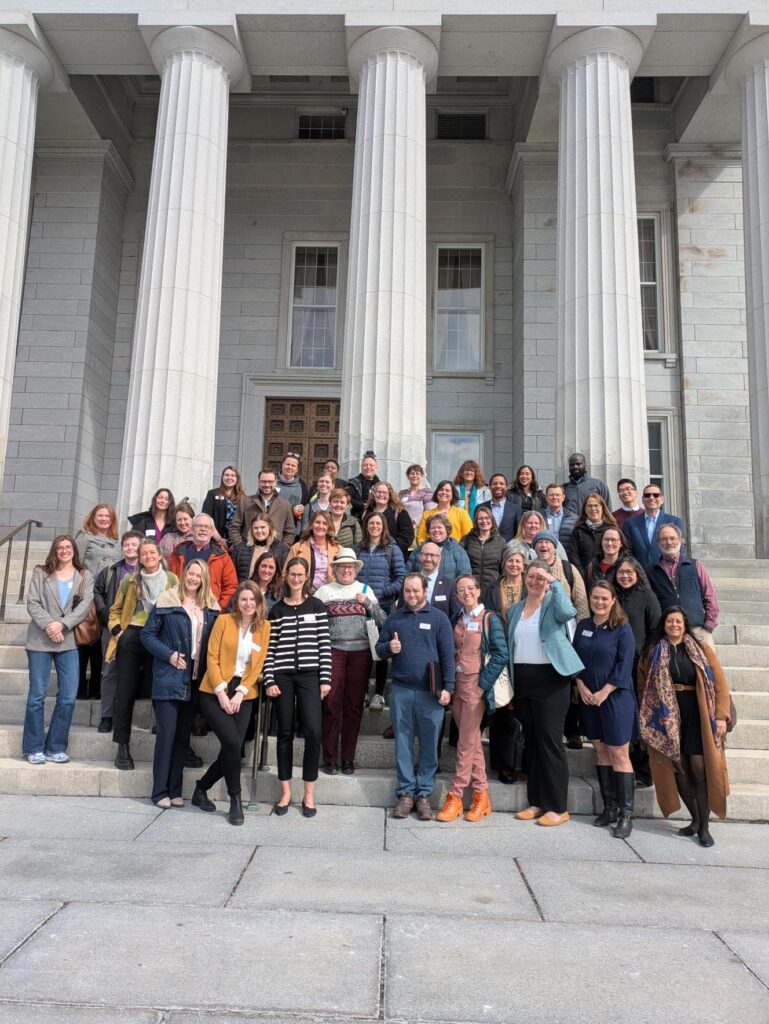
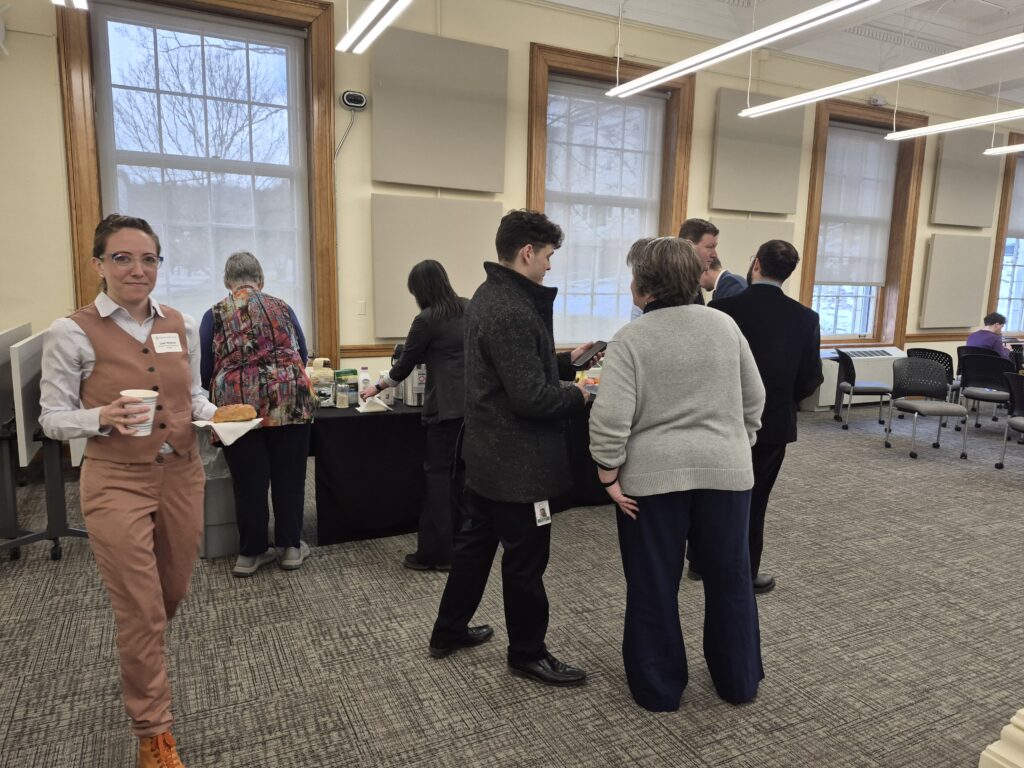
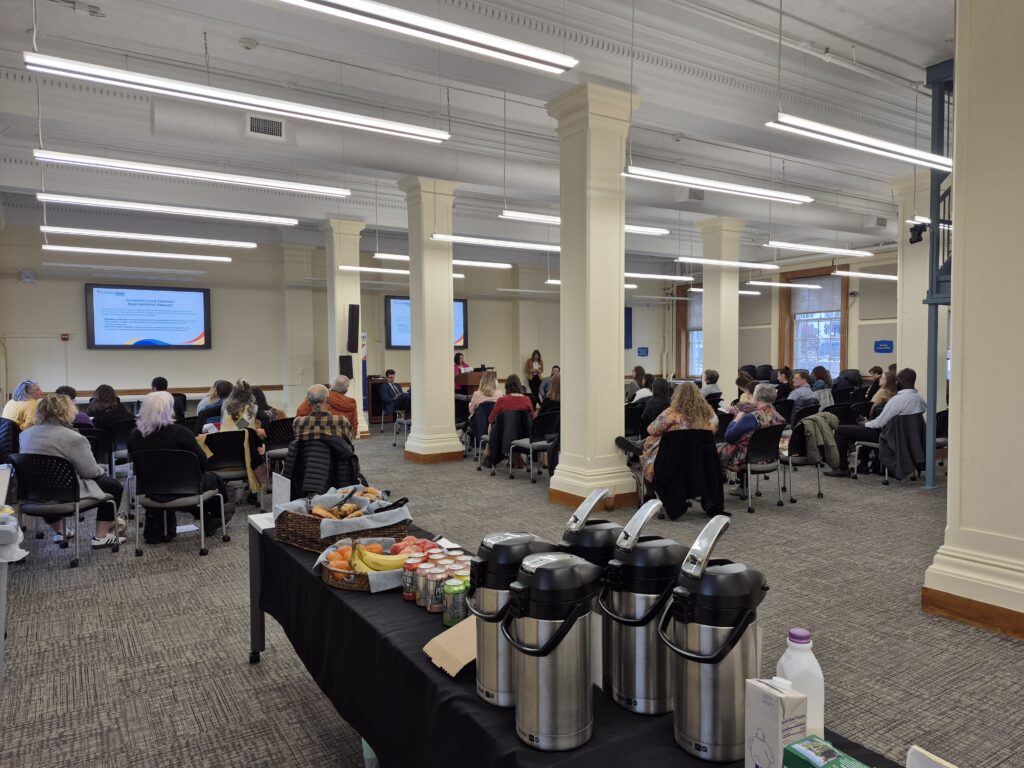
On Wednesday, March 25th, Common Good Vermont convened 50+ nonprofit leaders in Montpelier for Nonprofit Legislative Day.
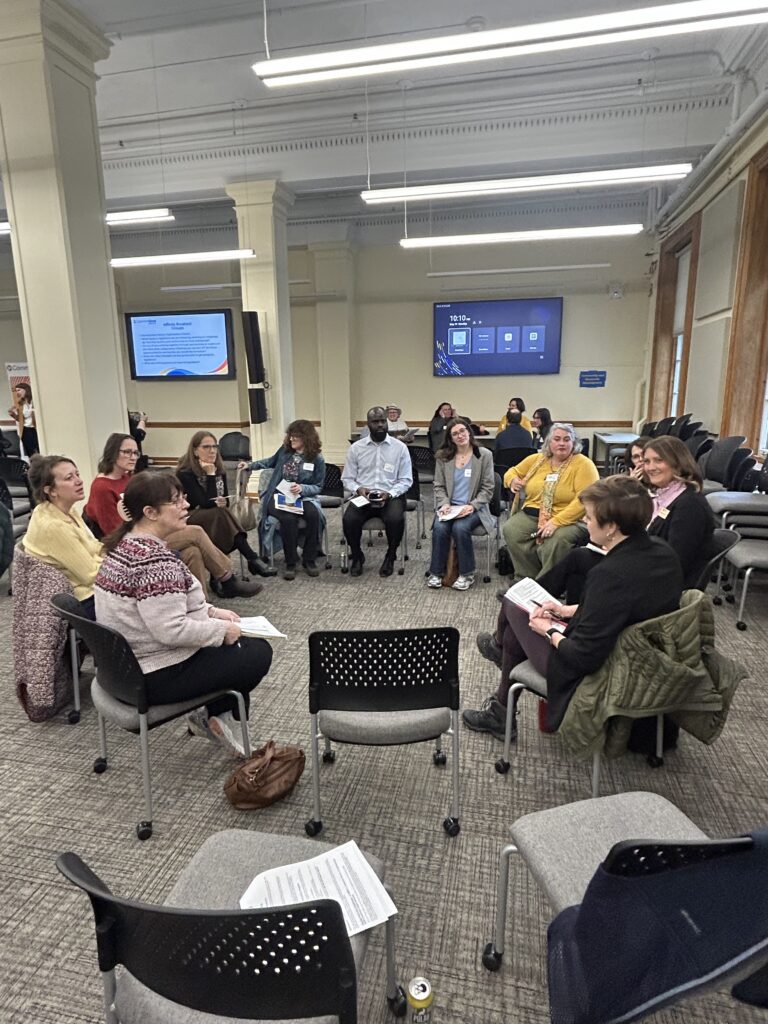
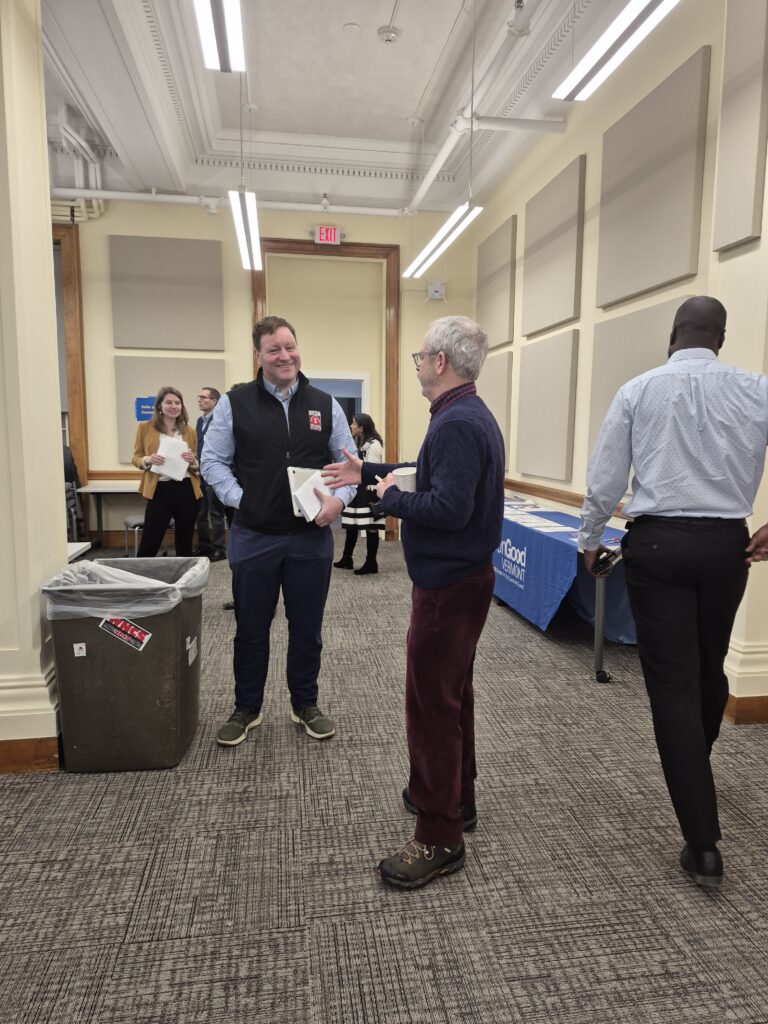
Our day started off over coffee and pastries, followed by conversations with guest speakers.
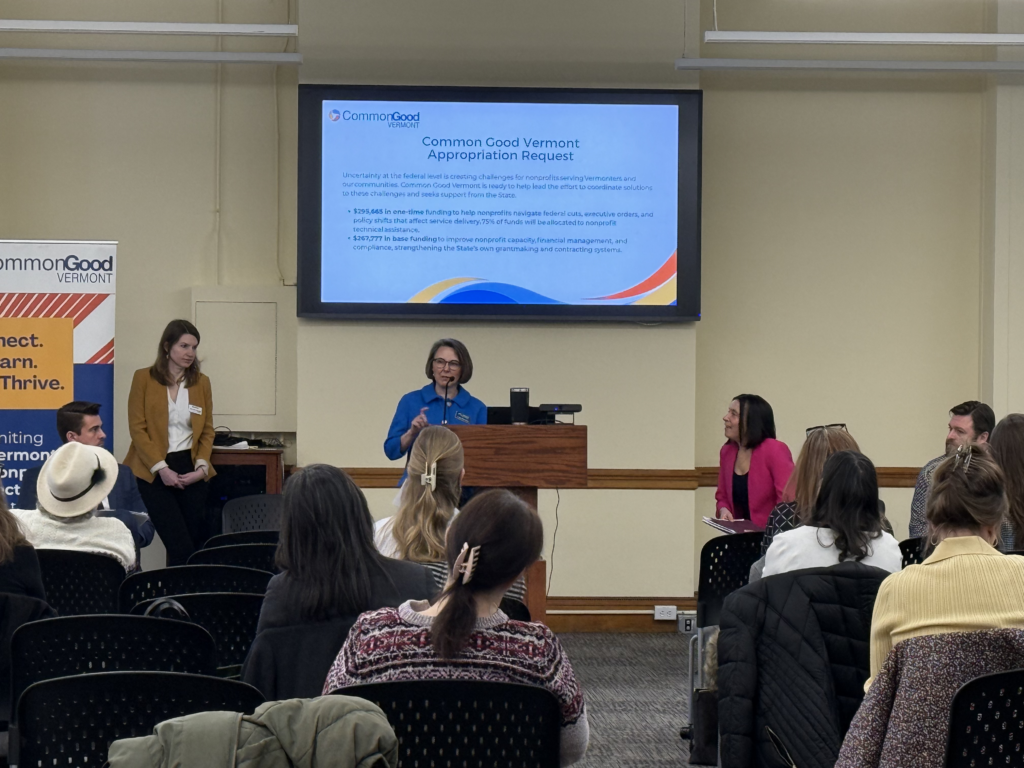
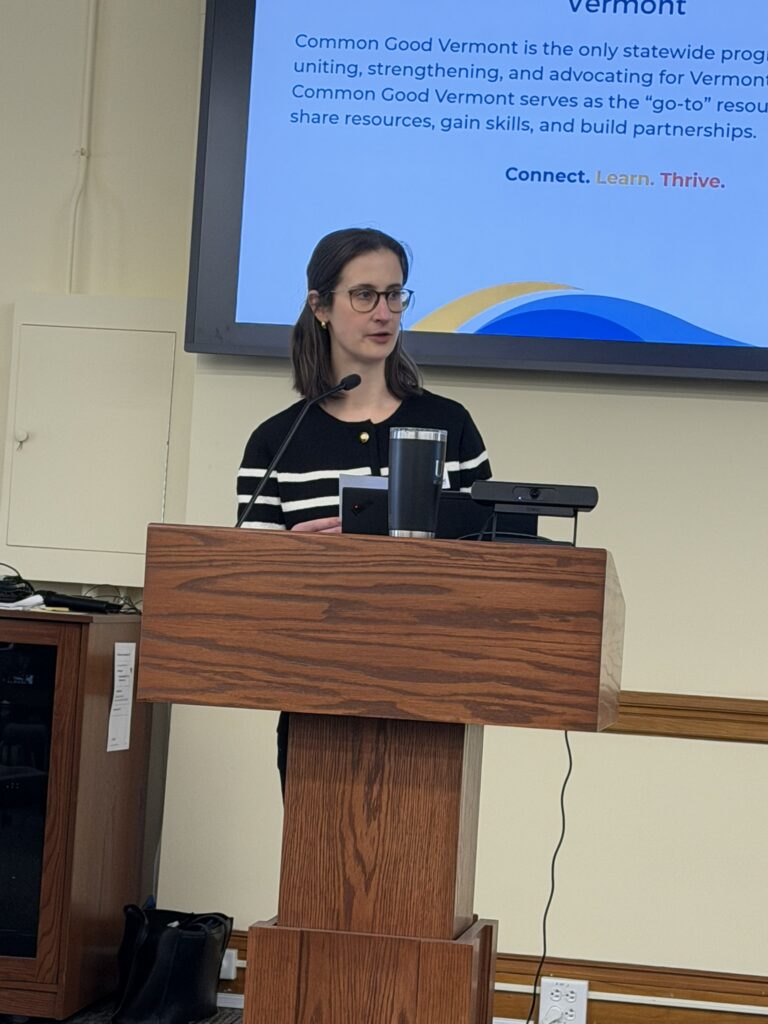
Common Good Vermont recognized Senator Clarkson and Representative Marcotte for their 20 years of service in the Vermont legislature and support of Vermont’s nonprofit sector. We then heard from USDA Rural Development State Director Patrick Suprunowicz, Secretary of Administration Sarah Clark, Deputy Housing Commissioner Nate Formalarie, and Agency of Human Services Secretary Jenney Samuelson. Our morning session closed out with an address by Treasurer Mike Pieciak, before breaking out into small group conversations to build connections with peers working in similar policy areas.
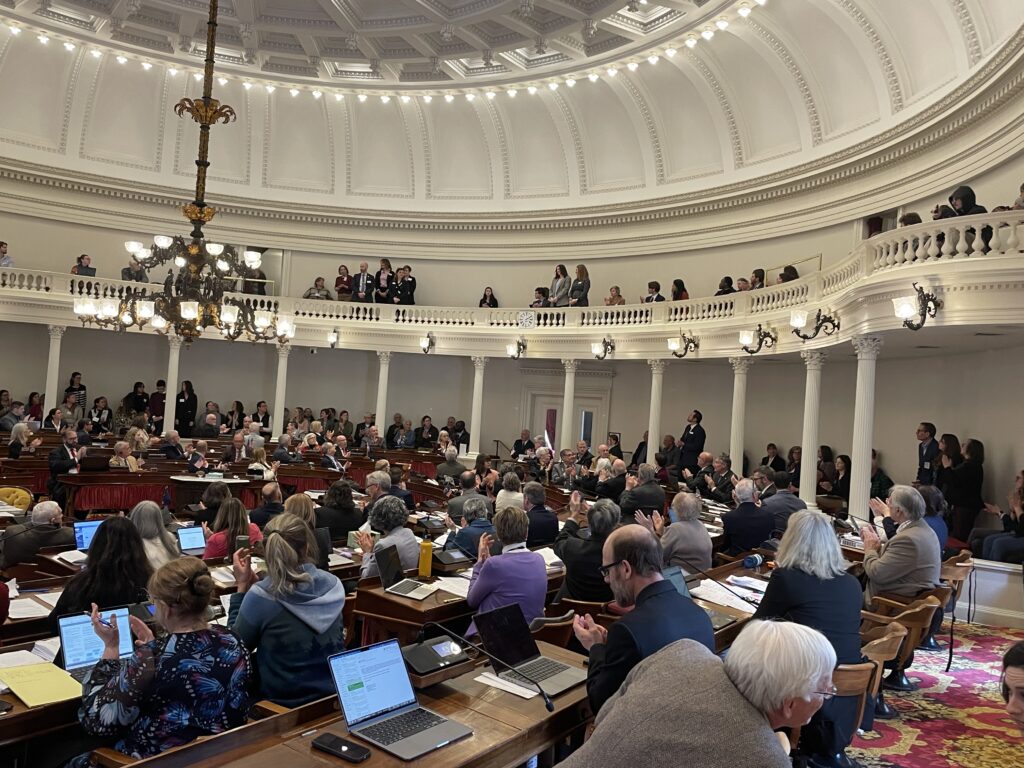
After a quick group photo, we headed into the State House where a resolution recognizing Vermont’s nonprofit sector was heard on the House Floor. Our day ended with a Lt. Governor Candidate Forum hosted by VBSR in partnership with Common Good.
Throughout the morning, nonprofits testified in three committees, elevating our sector and their missions. The need for stronger nonprofit infrastructure and adequate funding were common themes. Testimony can be watched by clicking the committee names below (summaries written by CGVT Policy Intern Rachel Farhi):
- House Commerce & Economic Development
- Kimberley Diemond (Big Brother Big Sisters of New Hampshire and Vermont)
Big Brothers Big Sisters has been serving Vermont since 1975 and its primary goal is to serve Vermont youth aged 6-18 by connecting them with a volunteer mentor. In testimony, Kimberley elevated the successful merger of the Vermont and New Hampshire BBBS organizations in 2025 which was supported by private funding and the help of a consultant. The merger strengthened the organization’s infrastructure which enabled them to diversify revenue, expand capacity, and better serve their communities. Reflecting on the merger, Kimberley shared “…it’s been wonderful for our team, it’s given our team opportunities to grow, where in a small nonprofit, we don’t have anywhere to go per se, it’s expanded our resources, we have access to resources that we did not have before, and we were able to bring our expertise to the table at New Hampshire. So, we’ve had a really wonderful experience with this. And you’re looking at me today with a smile on my face because I am not burnt out. I didn’t leave the nonprofit community and I was about to.” - Maggie Frye (Vermont Asylum Assistance Project)
Maggie of the Vermont Asylum Assistance Project (VAAP) made the case that ensuring people have access to legal representation “is an investment in economic resilience and a strategic investment in the state”. The organization is working to be a central spot for Vermonters to access immigration legal services, and to support their growth, they have been asking attorneys in the private sphere to contribute to the nonprofit pro bono to learn how to provide immigration services and address the rising demand that the organization’s small office has. In addition to supporting clients, they also serve as a resource to other organizations. As relying on philanthropy is not sustainable, the organization needs state funding to continue the important work they are doing especially now. - Jesse Bridges (United Way of Northwest Vermont)
Jesse opened with a reflection, sharing “I’m listening to my colleagues testify about what’s made their work really impactful is that supportive network of other organizations, other leaders, other people doing this work. And I think it’s one of the things I really appreciate about this committee is that Commerce has a given nonprofit to seat at the commerce table because we are businesses, one in five working group partners works for a nonprofit. We represent about 58% of the GDP. And so it’s a significant part of Vermont’s ecosystem, including the economy. And so it’s vital important that we’re a successful sector.” He also elevated Common Good Vermont’s appropriation request, clarifying that the nonprofit sector does not get public funding for technical assistance, unlike businesses, but needs support as well. While the organization is partnering to build programs like a nonprofit helpdesk to assist nonprofits with the support of private philanthropy, Jesse explained that the sector cannot only rely on the goodwill of communities and the private sector, funding for organizations need to be a “core piece of the infrastructure.”
- Kimberley Diemond (Big Brother Big Sisters of New Hampshire and Vermont)
- House Government Operations & Military Affairs
- Leah Brenner (Vermont Asylum Assistance Project)
VAAP provides free legal immigration services, mostly focused on humanitarian services, across Vermont. Leah shared how the coordination of VAAP and their legal partners throughout the state allowed the organizations to help 150 out of the 800 individuals Vermonters detained by ICE in 2025. This success represents how powerful nonprofit coordination infrastructure is. Leah explained “coordination not just through funding funding, but it’s really what turns strong nonprofits into a functioning statewide system, which in Vermont, I think is incredibly, incredibly important.” Leah also elevated how Common Good Vermont is ready to provide infratstructure and coordination that could help other organizations grow their impact, summing up “In Vermont specifically, coordination determines whether or not services actually reach the people that they’re designed to reach and serve. Nonprofits in Vermont already carry essential public facing work. And that shows what’s possible, but also the limits on what’s possible without that really necessary infrastructure, which takes time and money. It’s not fun or hot to build that infrastructure, but when it’s in place, then the work can really, really begin.” - Anera Foco and Francine Mbayu (Dismas of VT)
Anera and Francine introduced the Committee to their work. Dismas House is a community based organization that is connecting people with the community through transitional housing. The organization has five houses across the state in order to help formerly incarcerated people get back on their feet. Due to the current housing crisis the organization has made it one of its missions to find permanent new affordable housing for the people they serve. Dismas gets a majority of their work through volunteers, with 285 hours coming from volunteer work. The organization was not affected by federal cuts as they are mostly funded through fundraising within the community with the largest contract with the Department of Corrections. They also observed a troubling trend that “our partners and community that we could have relied on, from job training to medical, people are closing doors or minimizing staff, and unfortunately our folk are not first on the list to be served.” - Jesse Bridges (United Way of Northwest Vermont)
Jesse thanked the committee for the grants and contracts that have been completed but expressed that there is still work to be done. He shared that 211 is currently expected to do work for emergency services without a contract. To this point, there needs to be a relationship where nonprofits are not just seen as “key partners in the work, but respected and equal partners in that work”.
- Leah Brenner (Vermont Asylum Assistance Project)
- Senate Transportation
- Jordan Posner (Champlain Islanders Developing Essential Resources)
CIDER provides public transit in Grand Isle and has built over 200 accessibility ramps in people’s homes, serves 11,000 meals a month, and offers a wellness program that provides 4 programming classes a month. Jordan explained that “nonprofits are the lifeblood of our community” providing services and stepping in to help communities in ways that the government is not able to. However, for CIDER and the nonprofit sector as a whole, the cost of business has made it more difficult and hindered organizations ability to help their communities. Jordan also highlighted the work that Common Good does for the nonprofit sector and that Common Good is asking the state to allocate funds for technical assistance, grant making, and capacity building. - Alison Lamagna (United Ways of Vermont)
Vermont 211’s mission is to protect the health of Vermonters by providing a statewide information and referral system that gives access to community resources. The state relies on Vermont 211 to meet the demands of the communities they serve and there has been growing reliance on the organization recently due to the call volume growing every year. In addition to supporting Common Good’s appropriation request and asking the committee to support fully funding 211, Alison raised awareness more broadly for the need “for government financing contracts that fairly compensate and support nonprofits, especially as uncertainty at the federal level is creating more and more challenges.”
- Jordan Posner (Champlain Islanders Developing Essential Resources)
Thank you to all who played a role in making the day a success. We are grateful for everyone who took the time to show up for our sector and especially want to shout out our conversation leads for supporting facilitation, the event planning committee and UWNWVT/CGVT staff, Red Hen Bakery for providing tasty treats, VBSR for partnering on a Lt. Governor Forum, and Representative Barbara Rachelson for recognizing our sector on the House floor and all her help behind the scenes.



Budget & Taxes
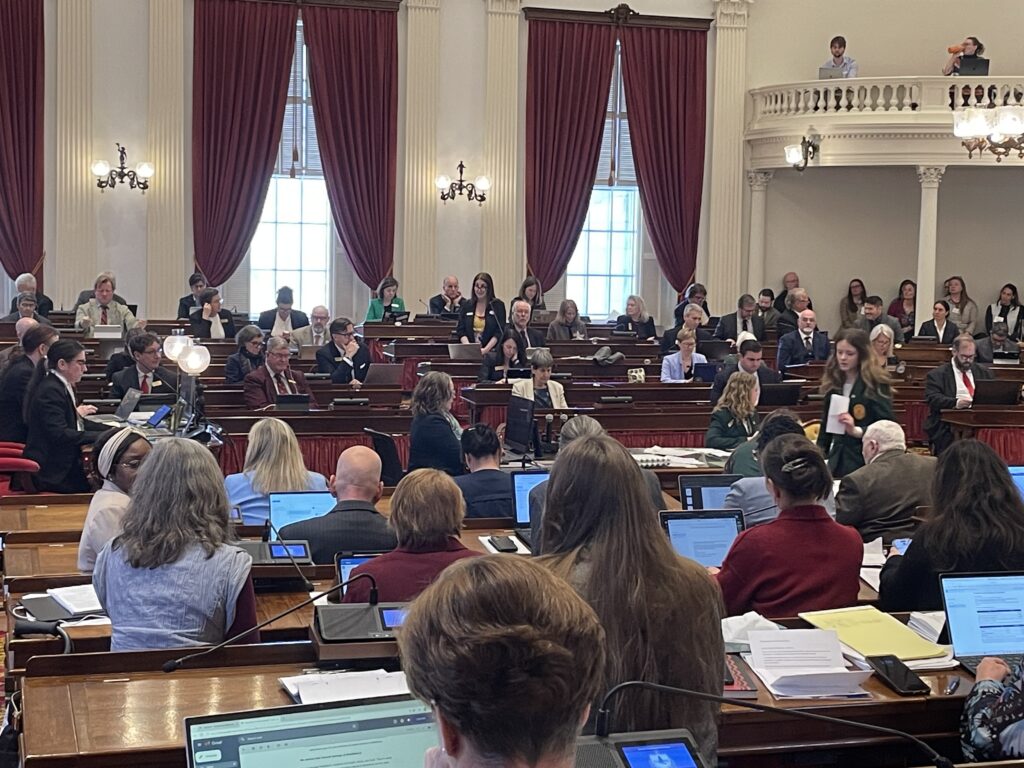
The House passed a $9.3B budget on March 27 on a vote of 97-40. While overall about $1M less than the Governor’s proposed budget, the House budget includes $17.5M more in general fund spending, about half of which is expected to be covered by increased revenue generated by proposed changes to the tax code. Another tax proposal that would increase taxes on VT’s highest earners did not make it through but was granted the opportunity to have a hearing and vote in House Ways and Means later this session by House leadership.
While the budget includes important investments in human services, housing, workforce, and more, it also reflects the constrained reality of post-ARPA funding, federal funding uncertainty, and cost of living concerns.
Explore the House-passed budget:
The budget will now move on to the Senate where it will continue to take shape. Common Good Vermont will continue to push for the inclusion of our appropriation request for nonprofit technical assistance in the second half of the session.
Health Care
H. 585, an act relating to health insurance reforms, has advanced to the Senate where it will be picked up by the Senate Finance Committee.
One of the provisions of interest to Common Good Vermont in this bill would require the governor to appoint two “representatives of the public” to hospital benefit corporation boards. While we understand the intent to increase accountability and transparency, we do have concerns about this provision creating a precedent that enables elected (partisan) officials to appoint board members to independent nonprofits.
The other, more significant, section of the bill would expand access to Association Health Plans (AHPs). AHPs could offer nonprofits cost savings on health insurance costs, bringing relief to some and making offering health insurance benefits a possibility for others. As passed by the House, AHP expansion is still included but delayed. The bill now requires a report from the Department of Financial Regulation to evaluate the regulatory landscape and market impacts, and pushes implementation out to January 1, 2028 at the earliest. This is disappointing as health insurance costs continue to rise and have real impacts on nonprofit employers and employees.
Common Good is scheduled to testify next Wednesday 4/8 and will address both of these provisions.
Other health care bills of interest advancing:
- H.577, An act relating to establishing the Vermont Prescription Drug Discount Card Program
- S.197, An act relating to establishing a primary care payment reform program
- S.190, An act relating to the Green Mountain Care Board, reference-based pricing, and hospital outsourcing of clinical care
Voter Protection
By CGVT Policy Intern Rachel Farhi
Bill S. 298, an act relating to creating the Vermont Voting Rights Act, was passed by the Senate and has been sent to the House Committee on Government Operations and Military Affairs. The updated bill passed by the Senate has been consolidated from previous drafts, but still holds true to its original intent to protect Vermonters’ and strengthen voters rights. The House Committee on Government and Military Operations has begun to look at the bill and expects to do more work on the bill. The bill aims to take effect on passage.
Key provisions of the bill as passed by the Senate include:
- New prohibitions on vote denial and vote dilution that the Attorney General would have the power to enforce
- Adds four new sections to 17 V.S.A. chapter 35, “offenses against the purity of elections”: Interference with Voting, Intimidation of Election Officers, Intimidation of Voters; Civil Cause of Action, and Communication of False Information to Eligible Voters
- Amends Vermont’s campaign finance law to make candidate security an eligible campaign expense
Testimony:
Sen. Kesha Ram Hinsdale, Sponsor supports bill S.298. Bill S.298 is set out to protect voting rights for Vermonters in response to potential national executive or judicial interference in the federal Voting Rights Act. The Senate Government and Operations Committee the bill was paired down to protect election principles while still giving the Secretary of State the ability to protect voting rights across the state. The bill is a response to the threats towards the voting rights act in the Supreme Court. In many ways Vermont conducts their elections well, however the state ranks very low in voting access for people with disabilities, which this bill would help remedy. The bill is set to help areas where people feel disenfranchised in the voting process and fix it throughout the state. Senator Hinsdale wants to make it clear that the bill is not discrediting election clerks, the work in the bill is not anything new, as currently it is all federal law, but instead the bill is meant to uphold the current federal standard.
Lauren Hibbert, Deputy Secretary of State, Secretary of State’s Office strongly supports bill S.298. The Secretary of State supports the bill because “it is taking federal law and incorporating it into Vermont law”. The current federal law has dictated Vermont elections and in the current state of the federal level the bill has to be incorporated into state law. Nothing in the bill will change how election clerks do their job or how the Secretary of State does their job. The bill provides protections but does not change election procedures. The Secretary of State office acknowledges that they need to do better with election access for Vermonters who are disabled, incarcerated, unhoused people, and those whose English is not their first language. The Secretary of State Office does want the title of the bill to be changed. Next year there might be a true voter rights act, hence there should be a change of the name of the current bill to the Voter Protection Act, as the bill is protecting voters. The Secretary of State office supports a dilution provision, which is a federal provision that might be removed. The provision would not change elections this year but it is an important statement to make. The Secretary of State office is open to continuing the discussion of the bill.
Paul Burns, executive director of the Vermont Public Interest Research Group, VIPIRG, supports bill S.298. As the threats of democracy are growing, with President Trump’s executive order to take control of mail-in voter processes. The protections of the Federal Voting Rights Act “are hanging on by a thread”. The threat to the federal act creates a need for S.298. The bill would ensure that every Vermonter has the right to vote and those that do not follow the bill will face consequences. Vermont cannot wait for federal protections to be restored, many other states have begun to create their own Voting Rights Acts and Vermont can join them in being more protected. VIPIRG has two suggested amendments to the bill. The first is an amendment that creates vote dilution remedies. Delusion remedies ensure that there is an equal political participation, even with structural disadvantages. The organization also supports an addition of a private right to action in order for the state to not only rely on the Attorney General for enforcement of the bill. This would allow communities that feel that their voting rights have been violated to not have to wait for the Attorney General’s office to approve their cause. VIPIRG also agrees with Hibbert about changing the name of the bill to the Voter Protection Act. VIPIRG strongly encourages the committee to pass the bill and the proposed amendments.
More Resources, Action Items & Updates
- From our friends at the Vermont Arts Council:
Action Alert: Sign the letter in support of honest ticket resale: Fans and venues (including nonprofits) are asking for protections to end predatory ticket resale in Vermont, which is harming both consumers and the live independent entertainment sector in our state. Senators are now debating H.512, a bill to implement common-sense guardrails on ticket resale, with intense pressure coming from corporate interests who don’t want this bill to pass. They need to hear from Vermonters who support independent venues, live events and music, and our communities. Sign a letter of support by Wednesday, April 8, to show lawmakers Vermonters want an honest ticket resale market: https://bit.ly/HonestTicketingVT - Common Good Vermont submitted public comments on proposed federal grant changes that would require organizations to certify they are not engaging in certain “DEI” activities. Read them here.
- VTBiz: Speaker Krowinski provides overview of bills passed by the House at crossover deadline
- VTDigger: House panel opts for voluntary school merger proposal. It faces a tough path forward.
- VT Public: Rep. Kornheiser on the Vermont property tax system’s complexities